Digital Detox Challenge: 30 Days to Reclaim Your Screen Time
A 30-day digital detox challenge with avoidance proof, craving tactics, and a room doing it with you. Rules for phones, social apps, and doomscrolling - plus setup steps and FAQs.
Published October 26, 2026 · 7 min read
The short answer
A digital detox challenge works when the rules are written precisely, every clean day ends with dated proof, and a small group sees the record. Define exactly what is off-limits and when, submit an avoidance confirmation each evening, and protect the streak through the fidgety first week.
Below: the numbers that make the case, the rule designs that survive contact with real life, the day-by-day texture of 30 days, and the exact setup in Aksa.
Why the phone wins, in numbers
DataReportal's Digital 2024 report estimated that the typical internet user spends 6 hours and 40 minutes online each day - for most people that is one of the largest single blocks of waking time they have. The attention is not stolen in one dramatic heist; it leaks in hundreds of small checks that each feel like nothing.
That is why willpower-based detoxes fail: the opponent is not one big decision but dozens of tiny ones a day, and willpower does not win volume battles. What wins is structure - rules precise enough to need no interpretation, proof that makes each clean day visible, and a cost for breaking that is immediate rather than abstract.
Aksa is a social platform with an AI agent. The useful design detail for detox goals: an action can be built around not doing something - an avoidance action with an evening Confirm as the day's proof. Not-doing is treated as a first-class, provable behavior.
Design rules you can actually keep
Rule one: define the detox by behavior, not vibes. 'Less phone' is unprovable; 'no social apps before noon, no phone in bed, no doomscrolling after 9 PM' is three checkable statements. Each rule should have a yes-or-no answer at the end of every day - if you cannot verify it, it is not a rule, it is a wish.
Rule two: keep the phone useful. Total abstinence fails because your phone is also your map, your camera, and your bank. The sustainable detox targets specific apps and specific windows - the infinite-scroll apps, the morning and late-night hours - and leaves the tool intact. You are retraining a relationship, not moving to a cabin.
Rule three: replace, do not just remove. Every detoxed hour needs a destination - the book on the pillow where the phone used to charge, the walk at the time the feed used to fill. In a 1999 paper in American Psychologist, Peter Gollwitzer showed when-then implementation intentions have strong effects on follow-through: 'When I reach for my phone at night, I pick up the book' is the format that survives the moment.
Rule four: charge the phone outside the bedroom. This single environmental change does more than any app limit, because the first and last hour of the day are where scroll habits are strongest. Buy a ten-dollar alarm clock; it is the cheapest intervention in this entire guide.
The 30 days, honestly
Days 1-3: phantom buzzing and reflexive reaching for a phone that is not there. The muscle memory is real and slightly alarming - most people catch themselves reaching dozens of times a day. This is the awareness phase; the reaching fades fast.
Days 4-10: boredom arrives, and boredom is the point. The mind starts proposing actual activities instead of feeds. The risk window is evenings; the replacement habit has to be in place by now or the phone wins the quiet hours.
Days 11-20: the fog lifts. Reading for 30 minutes stops feeling effortful, mornings start slower and better, and the streak count starts feeling like property. The main risk is the 'I am cured' exception - the wedding, the flight delay - decided in the moment instead of in the rules.
Days 21-30: design the exit. Decide which apps return, under what permanent rules, before day 30 ends. The detox that ends with a triumphant reinstall and a three-hour binge wasted the month; the one that ends with two apps gone forever and a phone that sleeps in the kitchen changed something.
Set up the challenge in Aksa
Five minutes of setup the night before, and tomorrow is day one.
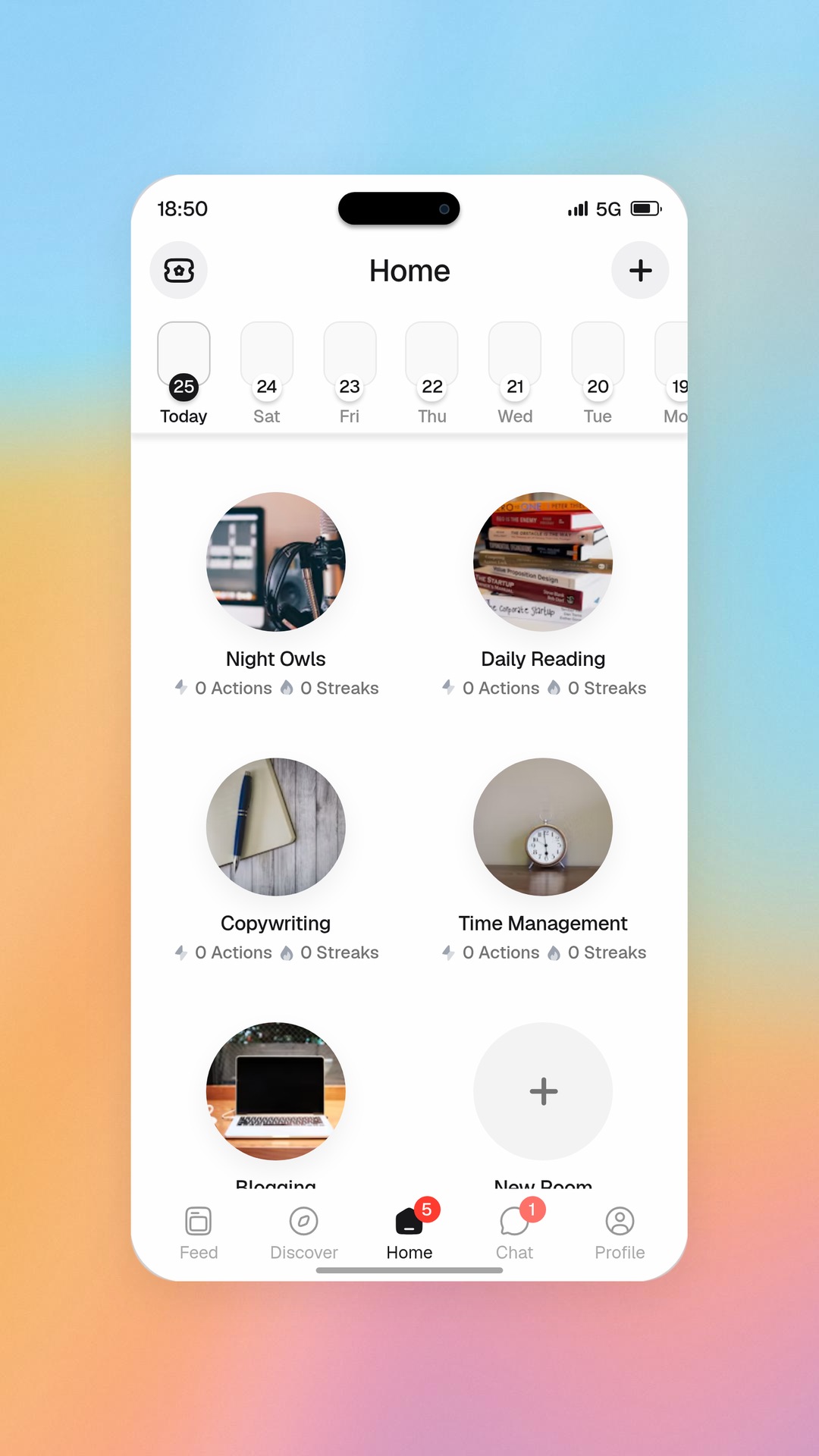
- 1. Write the rules as two to four checkable statements - named apps, named windows, named exceptions - and create the Goal around them.
- 2. Add a daily Action with an avoidance Confirm: each evening's proof is confirming the day stayed inside the rules.
- 3. Set a Reminder for the evening check-in - Repeat Every Day for a 30-day run, with the Alarm switch if notifications get buried.
- 4. Create an Action Room, post the shared rules, and invite your people - each friend who joins through your invite and finishes onboarding earns one month of Premium for both of you, up to five friends.
- 5. Do the environment work before day one: delete or bury the target apps, buy the alarm clock, put the book on the pillow.
- 6. Review the room heatmap every Sunday - it counts only verified proof days, and the Weekly Arena resets Monday at 00:00 UTC for a clean weekly slate.
Honesty about avoidance proof
Avoidance proof is self-reported - nobody can photograph not scrolling. The system is honest about this: Confirm-type proof is a dated personal attestation, and its strength comes from the context around it. A nightly confirmation posted to a room of people doing the same challenge, attached to a streak everyone can see, is a claim you keep honest because breaking it has witnesses.
That is also why the rules must be checkable. 'No TikTok before noon' produces a clean nightly confirm; 'used my phone mindfully' produces mush. The record's value at day 30 is entirely a function of how precise day zero's definitions were - write them like you expect them tested.
What to do with the reclaimed hours
Six hours and 40 minutes online a day is the average; even reclaiming one of those hours returns 365 hours a year - nine full work weeks. Have a plan for the first reclaimed hour or it refills with a different screen: the book, the walk, the instrument, the friend.
The deeper shift shows up around week three: attention starts feeling like something you own rather than something that happens to you. That feeling is the actual prize of the 30 days, and the reason most finishers keep some version of the rules permanently - not as restriction, but as the new normal they built one proven day at a time.
Doing it together changes the texture
A solo detox has a specific failure mode: nobody to tell. The clean day feels unrewarded, the slip feels invisible, and the whole project slowly stops feeling real. A room fixes the texture of the experience - the nightly confirmations become a ritual you share, and the occasional 'day 11, still twitchy' message from someone else is worth more than any article, including this one.
Keep the room small and the tone light. Two to five people, proof nightly, reactions allowed, sermons banned. The room's job is not to monitor anyone; it is to make the invisible month visible - thirty people-days of proof per person, on a heatmap, is a thing a group builds together that nobody could build alone.
FAQ
What should a 30-day digital detox actually ban?
Target behaviors, not the device: the two or three infinite-scroll apps that eat your time, plus two windows - typically the first hour of the morning and the last hour before bed. Total abstinence fails because the phone is also your map and camera; precise rules with yes-or-no answers survive the month.
How much screen time is too much?
DataReportal's Digital 2024 report put typical daily internet use at 6 hours and 40 minutes, so most people are not unusual - they are average in a way worth questioning. The practical test is displacement: if screen hours are replacing sleep, reading, exercise, or people, the amount is too much regardless of the number.
How do you prove you stayed off your phone?
With a dated nightly confirmation, plus rules precise enough to make the confirmation meaningful. Avoidance proof is self-reported by nature - its strength comes from the streak and the room watching it. A clean-day claim posted every evening for 30 days to people doing the same challenge is a claim you keep honest.
What are the first three changes to make for a phone detox?
Delete or bury the two highest-drain apps, charge the phone outside the bedroom with a real alarm clock, and set one replacement habit for the evening scroll slot - a book on the pillow works. These three remove most involuntary usage before willpower is ever consulted.
What if I need my phone for work during the detox?
Keep the work functions and detox the loops: email and messaging stay, the infinite-scroll apps go. Write the exception list on day zero - named apps, named windows - so a work need never becomes a general exemption negotiated at 11 PM with yourself.
What happens when the 30 days end?
Design the exit before it arrives: which apps return, under what permanent rules. Most finishers keep two or three changes forever - the phone outside the bedroom, no feeds before noon - because the month recalibrated what normal feels like. A detox that ends with a binge reinstall wasted the reset.