Meal Prep for Beginners: A 2-Hour Sunday System That Sticks
Beginner meal prep in two hours a week: the minimal method, a first-session shopping list, storage rules, and the weekly proof habit that keeps prep from fading by week three.
Published October 27, 2026 · 7 min read
The short answer
Beginner meal prep means cooking two proteins, two vegetables, and one grain in a single two-hour Sunday session - enough for four to five mix-and-match lunches - and repeating it weekly until the session is automatic. Small scope, same time every week, and a dated photo of the finished containers as proof.
This guide covers why ambitious prep fails, the minimal method, a first-week shopping list, storage basics, and the weekly accountability that keeps the ritual alive past week three.
Why meal prep fails by week three
Week one is glorious: nine containers, matching lids, a fridge that looks like a commercial. Week two is a chore. Week three is takeout. The collapse is almost never about cooking skill - it is scope. Five recipes, nineteen ingredients, and four hours is a production, and productions need a free Sunday, high energy, and sustained enthusiasm all at once.
The fix is to make the session small enough to survive the worst Sunday of the month. Two hours, five components, one pan in the oven and one pot on the stove. Boring beats impressive: the goal of month one is not a varied menu, it is a Sunday ritual that always happens.
The second failure is the missing trigger. 'Prep on the weekend' is not a plan; 'Sunday at 3 PM, after lunch, the oven goes on' is. In a 1999 paper in American Psychologist, Peter Gollwitzer showed strong effects on follow-through from when-then implementation intentions - the ritual needs a fixed slot, not a floating intention.
The minimal method: five components, two hours
The formula: two proteins, two vegetables, one grain. Example session: chicken thighs and baked tofu as proteins, roasted broccoli and peppers as vegetables, rice as the grain. Season the two trays differently and the combinations cover the week without boredom - this is the mix-and-match principle, and it is what makes the minimal method sustainable.
The two-hour timeline: preheat and start the rice (10 minutes of active time), tray the proteins and vegetables and into the oven (15 minutes), clean as things cook (30 minutes of mostly waiting), portion into containers (20 minutes), done. The session gets faster every week as the routine memorizes itself.
Do not prep five days of everything. Four lunches is the sweet spot for freshness and flexibility - Friday happens, plans change, and a rigid five-by-five schedule is how containers die of neglect in the back of the fridge.
The first-session shopping list
Proteins: 1.5 pounds of chicken thighs and one block of firm tofu (or double the chicken). Vegetables: two heads of broccoli and three bell peppers. Grain: a bag of rice. Pantry: olive oil, salt, pepper, garlic powder, soy sauce, and one sauce you love - the sauce is not optional, it is what makes Tuesday's container taste different from Thursday's.
Containers: five to eight matching ones with lids that seal. Matching matters more than material - a stack that nests and lids that fit remove the daily friction that quietly kills the habit in week five.
Total cost runs lower than two takeout lunches in most cities, and the session feeds four. The economics are a side benefit - the real return is the week of lunches that required zero weekday decisions.
Storage rules that keep food safe
The basics are simple and worth following strictly. Cool the food before sealing containers - steam trapped in a closed container breeds trouble. Refrigerate within two hours of cooking. Eat refrigerated preps within four days, which is exactly why the plan targets four lunches: the calendar and the safety window agree.
Anything beyond four days goes in the freezer the day you cook it, not the day you remember it. Label with the date using tape and a marker - future you will not remember whether that container is from Sunday or the Sunday before, and guessing is not a food-safety strategy.
Reheat until steaming hot throughout. If a container smells or looks off, the rule is old and unglamorous: when in doubt, throw it out. No streak or budget is worth the alternative.
Make the ritual stick with proof
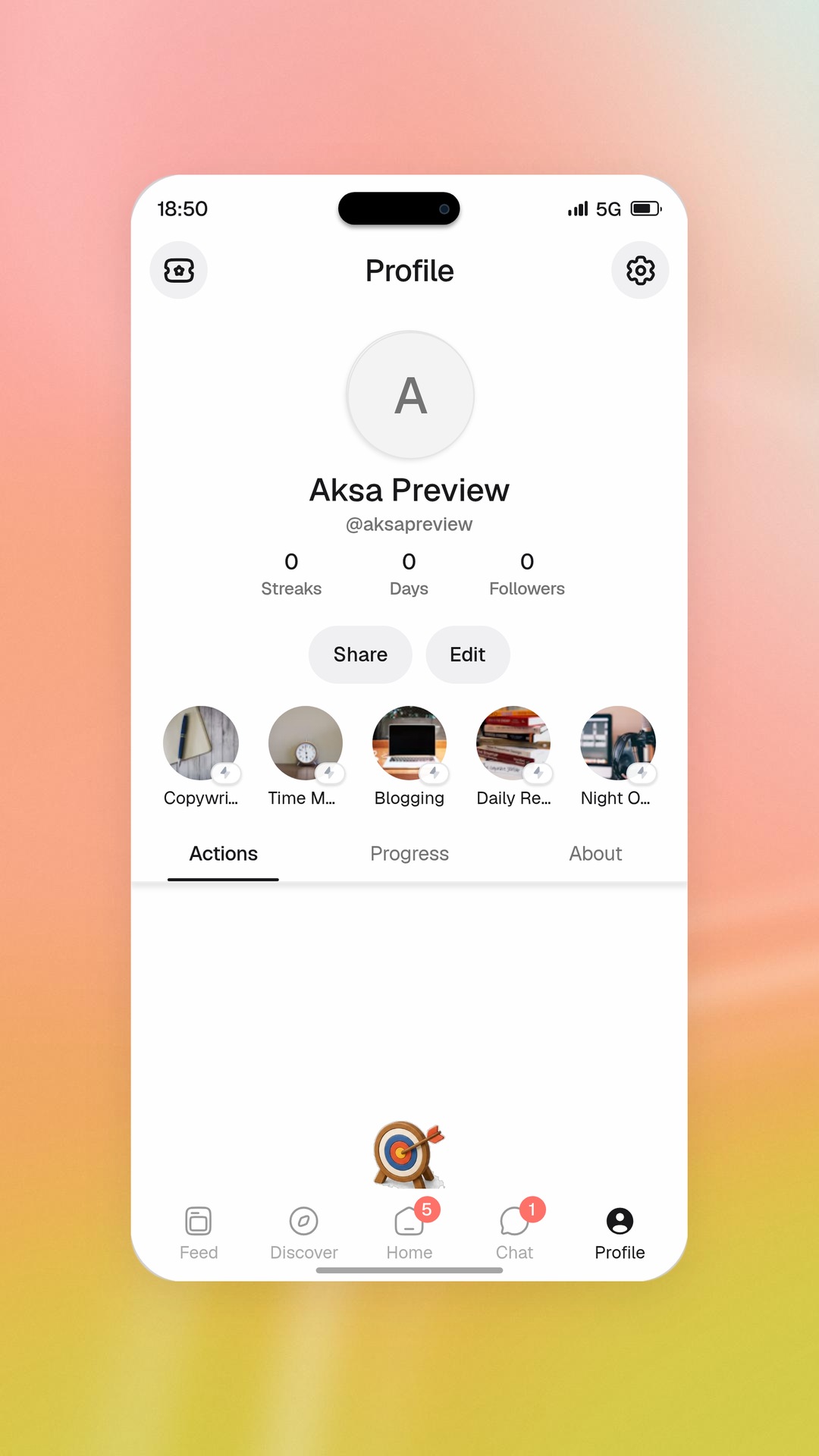
Aksa is a social platform with an AI agent - and a weekly prep ritual is a natural weekly Action. A Photo of the finished containers is dated proof the session happened, and a Reminder set for Sunday at 3 PM with Repeat on your chosen days keeps the slot from floating. Aksa AI can help decompose the goal into provable actions at setup and plan next steps; it never marks the session done, because Verified Done requires durable proof.
The streak that builds is weekly rather than daily, and it protects exactly the right thing: the ritual itself. Streak counts move only on verified proof days - so by week six the photo row is a record you do not want to break.
Run it in a small Action Room if you can: two to five people posting their Sunday containers is quietly powerful. It normalizes the boring session, trades sauce ideas and component combos, and makes the 3 PM slot feel like an appointment with people, not just poultry.
Set up your prep ritual in Aksa
Fifteen minutes tonight, and Sunday is session one.
- 1. Create the Goal: 'Meal prep every Sunday, 4 lunches, 12 weeks' - one provable sentence.
- 2. Add a weekly Action with a Photo proof: the finished containers, dated, every session.
- 3. Set a Reminder for Sunday at 3 PM - Repeat on your chosen day, Alarm switch if afternoons disappear on you.
- 4. Shop from the first-session list on Saturday - the ingredients in the house are the session's real trigger.
- 5. Create or join a small Action Room of fellow preppers - each friend who joins through your invite and finishes onboarding earns one month of Premium for both of you, up to five friends.
- 6. After four sessions, expand: one new component or recipe per week, never a full menu overhaul.
Growing past the beginner formula
Month two is where variety earns its place: swap one component per session - salmon for chicken, sweet potatoes for rice - so the rotation widens without the session growing. The two-hour cap stays. The cap is the ritual's bodyguard; the moment prep becomes a four-hour event is the moment it starts needing motivation again.
In a 2009 study by Lally and colleagues in the European Journal of Social Psychology, habits take a median of 66 days to automate - eight to nine Sunday sessions. Protect the first eight ruthlessly: small scope, fixed slot, photo proof. After that, the ritual carries itself, and weekday-you eats the proof all week.
The compounding week
The first session buys four lunches. The fourth session buys four lunches, a faster two hours, a stocked pantry, and a Sunday rhythm the household starts planning around. By week eight the ritual is load-bearing: weekday lunches stop being a decision, the grocery run shrinks to one list you know by heart, and the photo row tells you exactly how long the streak has run.
That compounding is the argument for starting small and never breaking the two-hour cap. A modest ritual that runs 40 Sundays a year outperforms the ambitious one that ran three - by roughly 148 lunches, if anyone is counting.
FAQ
How long does meal prep take for a beginner?
About two hours for the minimal method - two proteins, two vegetables, one grain, covering four lunches. Most of that is oven and stove waiting time; active work is under an hour. The session speeds up weekly as the routine memorizes itself, and the two-hour cap is what keeps the ritual sustainable.
How long does meal-prepped food last in the fridge?
Four days refrigerated is the standard safe window for cooked proteins, grains, and vegetables - which is why the plan targets four lunches. Cool food before sealing, refrigerate within two hours of cooking, freeze anything meant for later on the day you cook it, and reheat until steaming throughout.
What are the easiest foods to meal prep as a beginner?
Chicken thighs, firm tofu, roasted broccoli, bell peppers, and rice - forgiving, hard to overcook, and they reheat well. Avoid delicate greens, fried foods, and anything crispy; they degrade by day two and punish the whole idea. Sauces carry the variety, so components can stay simple.
Is meal prep actually cheaper than buying lunch?
Usually substantially - a five-component session typically costs less than two bought lunches and covers four. The bigger return is decisions: a week of lunches with zero daily negotiation is the productivity gain people stay for, with the savings as a welcome side effect.
How do I keep from getting bored of the same meals?
Mix-and-match components and rotate sauces - the same chicken over rice reads differently with a different sauce and vegetable pairing. After the first four sessions, swap one component per week. Boredom is a rotation problem, not a cooking problem, and small weekly changes beat menu overhauls.
What if I miss a Sunday prep session?
Do a rescue session Monday evening with the smallest version - one protein, one vegetable, one grain, one hour - or accept the gap and protect next Sunday's slot. One missed week costs nothing structurally; the habit research (Lally and colleagues, European Journal of Social Psychology, 2009) found single misses did not materially derail formation. Two missed Sundays is the pattern to fight.