Sober Streak Apps: Counting Alcohol-Free Days With Real Support
A sober streak is easier to keep when each day is verified, witnessed, and one day long. How to run a Dry January or personal break with structure.
Published October 25, 2026 · 7 min read
The direct answer
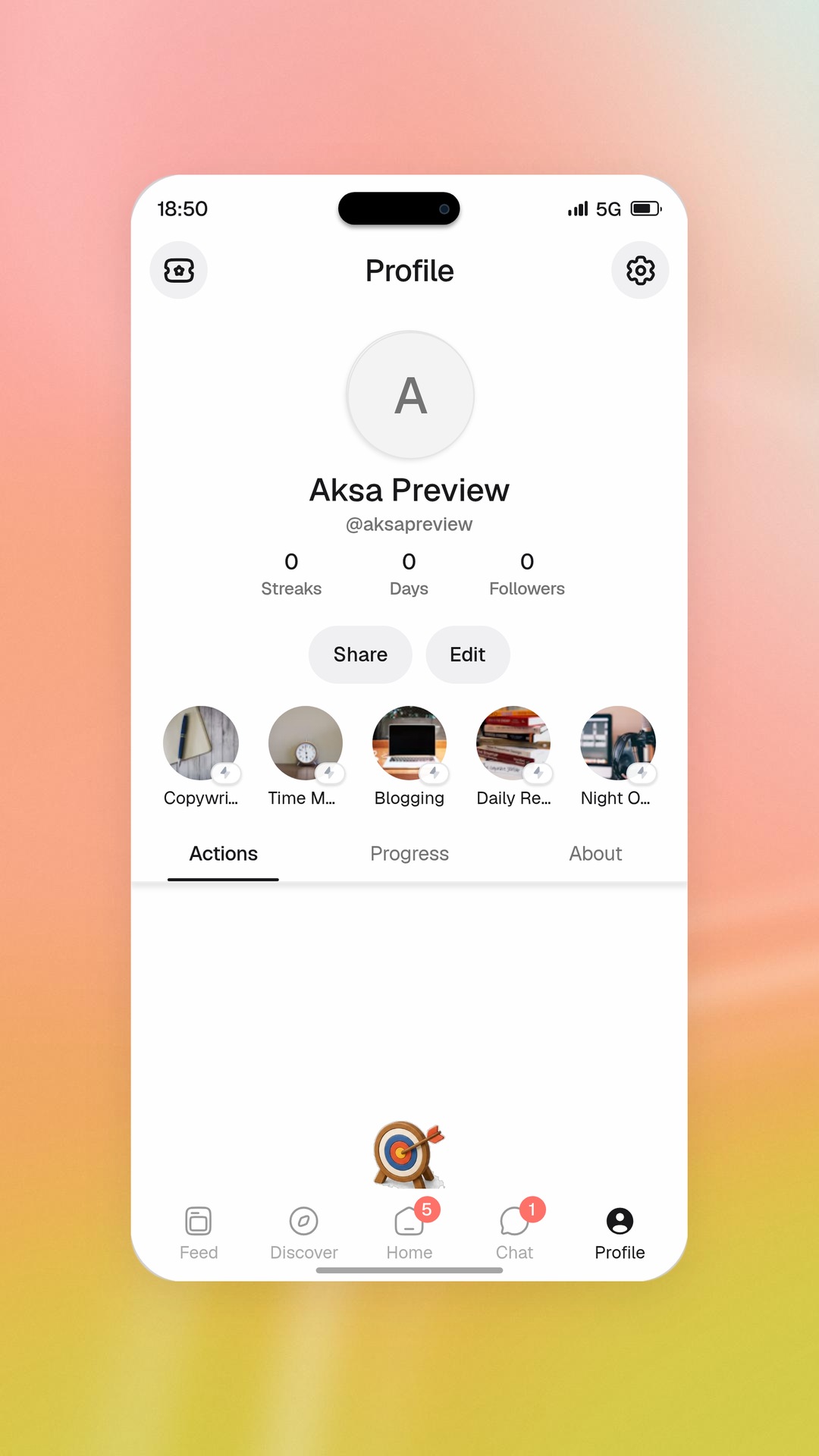
Aksa is a social platform with an AI agent. A sober streak holds when every alcohol-free day is verified with a real check-in, witnessed by people who cheer rather than judge, and aimed only at today, never at forever.
A note before the mechanics: streak apps are structure for a personal break or a Dry January-style challenge, not treatment. If alcohol is causing harm in your life, a doctor or a support service is the right first call, and no app replaces that.
One more ground rule for everything that follows: the streak is a servant, not a master. It exists to make today's choice easier, and the day it starts producing shame instead of clarity is the day to shrink the goal back to one honest check-in and talk to the room.
Why counting days works
The count converts an endless, abstract resolution into a concrete, finite game: today's number is all you are responsible for. Behavioral research on streaks keeps confirming the mechanism; Duolingo's November 19, 2020 engineering post reported that users reaching a 7-day streak were 2.4 times more likely to return the next day, because the chain itself becomes an asset you protect.
The count also flips the emotional math of a lapse. Without a streak, one drink erases nothing and proves nothing, which makes the next one easy. With a visible chain of verified days, each day has something real attached to it, and the decision gets honest.
And the count gives friends something to rally around. 'Thirty days today' is a celebration people know how to join; 'I am trying to drink less' is not.
There is also a calendar effect worth using: named months like Dry January or Sober October give the challenge a start line, a finish line, and millions of quiet co-participants. A personal break works the same way with a room supplying the co-participants, but borrow the named-month energy whenever the calendar offers it.
Set the rules before day one
Define what counts in writing: fully alcohol-free days only, or your own stated line, such as alcohol-free weekdays. Vague rules renegotiate themselves at parties. A written line, agreed with your room, is the whole contract.
Decide the daily floor: one check-in per day, every day, at a fixed hour. Evening works best because the day is complete; the check-in closes it.
Decide the lapse protocol now, while you are calm: log it honestly, next day is a guaranteed check-in at the floor, and the count restarts at one without drama. A documented restart beats a quiet abandonment every single time.
Verify each day with proof
In Aksa, each alcohol-free day closes as a Confirm Action: the binary commitment primitive, one honest confirmation that today stayed clean. Progress counts only verified proof, never an unverified tap, which keeps the streak a record of closed days rather than intentions.
Add an Answer line on the hard days: what the trigger was, what you did instead. Two sentences. Thirty of those entries become a map of your own pressure points, which is the most useful self-knowledge a break produces.
The archive matters on the flat days: a consistency heatmap filling with verified days, and a streak number that only ever moved honestly, is evidence you can lean on when motivation thins.
Keep the check-in ritual small and unceremonious. This is one area where a loud celebration every night can backfire, because it keeps the thing you are leaving at the center of the evening. A quiet Confirm, a streak that ticks up, a cheer from the room, then on with your night. The goal is a life where not-drinking is ordinary.
Choose witnesses who cheer, not judge
The right room is small and kind: two to six people running their own breaks, posting daily Confirm check-ins, celebrating streak milestones. Claim cards carry the streak, cheers arrive as push notifications, and nobody audits anyone's reasons.
If real-life friends feel too close for this one, that is normal: many people prefer a room of supportive strangers for a sober challenge. Aksa's Discover hub and Group tab list public rooms, and the platform passed 900 registered members in its first month, per a company database count in late September 2026, so rooms stay small and human.
Aksa AI keeps the room steady: it plans the daily action list, answers goal questions, and posts updates, so the space stays warm through the weekends, which are, not coincidentally, when this challenge is hardest.
Milestone math helps on the long flat middle: day 7 is the week, day 14 is proof it was not a fluke, day 21 is three weekends survived, day 30 is the finish line. Each milestone earns a room cheer, and breaking the month into four named hills makes the whole climb feel like a series of short walks.
Protocols for the hard moments
Parties and dinners: decide your drink before you arrive, sparkling water with lime reads as a cocktail and ends most questions, and check in early the next morning as your proof. Having the script ready is most of the battle.
Stress spikes: the Answer line is your release valve. Writing 'wanted one at 7pm, went for a walk instead' converts a white-knuckle moment into a documented win, and documented wins compound.
After a lapse: run the protocol without a committee meeting in your head. Log it, check in tomorrow, restart at one. The Weekly Arena resets leaderboards every Monday at 00:00 UTC for the competitive rooms, but the only streak that matters here is the honest one on your profile.
Set up your sober streak today
Fifteen minutes:
Then close today with the first check-in tonight. Day one is always available.
Finally, keep the distinction between structure and care visible to yourself. The streak, the room, and the protocols are load-bearing for a break; cravings that feel bigger than willpower deserve professional support, and reaching for that is a strong move, not a failed streak. The app holds the structure; humans hold the rest.
- 1. Write the rule: what counts as a clean day, in one sentence, no vagueness.
- 2. Create the daily Confirm Action in Aksa, with an optional Answer line for hard days.
- 3. Create or join a small sober-streak Action Room, friends or supportive strangers.
- 4. Set one evening reminder for the daily check-in, Repeat Every Day.
- 5. Write the lapse protocol into the room chat: log it, next day clean, restart at one.
- 6. Decide tonight's plan for the next social event before it is upon you.
What the count becomes
Thirty verified days is a month of mornings, clearer sleep, and a number you earned one evening at a time. The heatmap shows the weekends you survived, which is where the pride actually lives.
Most people who finish a structured month discover the question has changed: not 'can I stop' but 'what do I want the rule to be now.' That is a much better question, and you will answer it with thirty days of your own data in hand.
Whatever you decide next, the structure stays available: the room, the floor, the honest count. Breaks, resets, and permanent changes all run on the same machinery.
FAQ
Do sober streak apps actually help?
The streak mechanism is well supported: visible chains of completed days become assets people protect, as Duolingo's published data on 7-day streaks illustrates. What helps most is the combination in Aksa: a verified daily check-in, witnesses who cheer, and a lapse protocol, so the count stays honest and the support stays kind.
Is a sober streak app a replacement for treatment?
No, and it should never pretend to be. Streak apps are structure for personal breaks and challenges like Dry January. If alcohol is harming your health, work, or relationships, professional support, a doctor or a dedicated support service, is the right first step, with apps as a possible companion at most.
What counts as a clean day in a sober streak?
Whatever your written rule says, agreed before day one: fully alcohol-free days, or your stated line such as alcohol-free weekdays. The rule must be specific enough that a party cannot renegotiate it. In Aksa each clean day closes as a verified Confirm check-in.
What should I do if I break my sober streak?
Run the pre-decided protocol: log the lapse honestly, make the next day a guaranteed check-in, restart the count at one without drama. The documented restart is what separates people who keep going from people who quietly disappear, and the room's job is cheers, not judgment.
Should I tell people I am doing a sober challenge?
A small chosen circle, yes: witnesses are half the mechanism. It does not have to be close friends; many people prefer a room of supportive strangers for this one. Aksa Action Rooms of two to six people posting daily check-ins give you recognition without exposure.
How long should a first sober challenge be?
Thirty days is the proven format: long enough to change reflexes and sleep, short enough to see the finish line from day one. Most people who finish a structured month find the question shifts from 'can I stop' to 'what rule do I want now,' and that is the conversation worth reaching.