Morning Routine Accountability: Make Waking Up Count (2026)
A morning routine accountability app makes the first hour visible: wake-up confirmations, proof of the routine, and a room that sees whether today started on time. Setup, mechanics and the weekly rhythm.
Published October 23, 2026 · 7 min read
The short answer
Morning routine accountability means making the first hour checkable: a daily wake-up confirmation, proof for each part of the routine, and a room of people who see whether today started on time. Aksa is a social platform with an AI agent that runs exactly this loop.
The reason mornings need their own system: the routine's enemy is the snooze button, and the snooze button only wins in private. When five people will see your wake-up timestamp by 7 AM, the negotiation goes differently.
This guide covers the setup: choosing the routine's floor, picking proof formats for each part, recruiting the room, and surviving the first dark weeks.
Why morning routines fail in private
The morning decision is made by the least reliable version of you: half-asleep, under a warm blanket, with the negotiating skills of a defense attorney. 'Ten more minutes' wins because nobody will ever know it happened.
Private trackers do not fix this - they log the failure after the fact. The 6:47 AM entry in a solo app is a confession to no one, and confessions to no one do not change behavior.
The structural fix has two parts: make the wake-up itself a checkable event (a timestamped confirmation), and make the check visible to someone before the day absorbs the excuse.
Part 1: Design the floor routine
The classic failure is the heroic routine: 5 AM, meditation, journaling, workout, cold shower, reading - abandoned by day nine. Design the floor instead: the smallest version that still counts as 'the routine happened.' Wake time plus two anchors is enough.
A workable floor: confirm wake-up by 6:30, then two anchors - ten minutes of movement and five minutes of planning. That is a fifteen-minute routine that survives travel, illness and bad sleep, and it is the chain that matters.
Grow at weekly reviews: add the cold shower in week three if the chain is intact. The impressive routine is assembled from an unimpressive one that never broke.
Part 2: Choose proof for each part
The wake-up: Aksa's confirm primitive - a timestamped yes that you are up. Simple, binary, honest. The timestamp is the point: 6:28 and 8:15 are different days, and the record says which.
The movement: a timer session or a photo - the watch face, the yoga mat, the push-up count on the counter. The planning: a written answer - 'today's three priorities' in two sentences, which doubles as the planning itself.
Keep the total proof budget under three minutes. A routine whose logging takes ten minutes dies on the first rushed morning - the proof must survive the same time pressure the routine does.
Part 3: Recruit the room
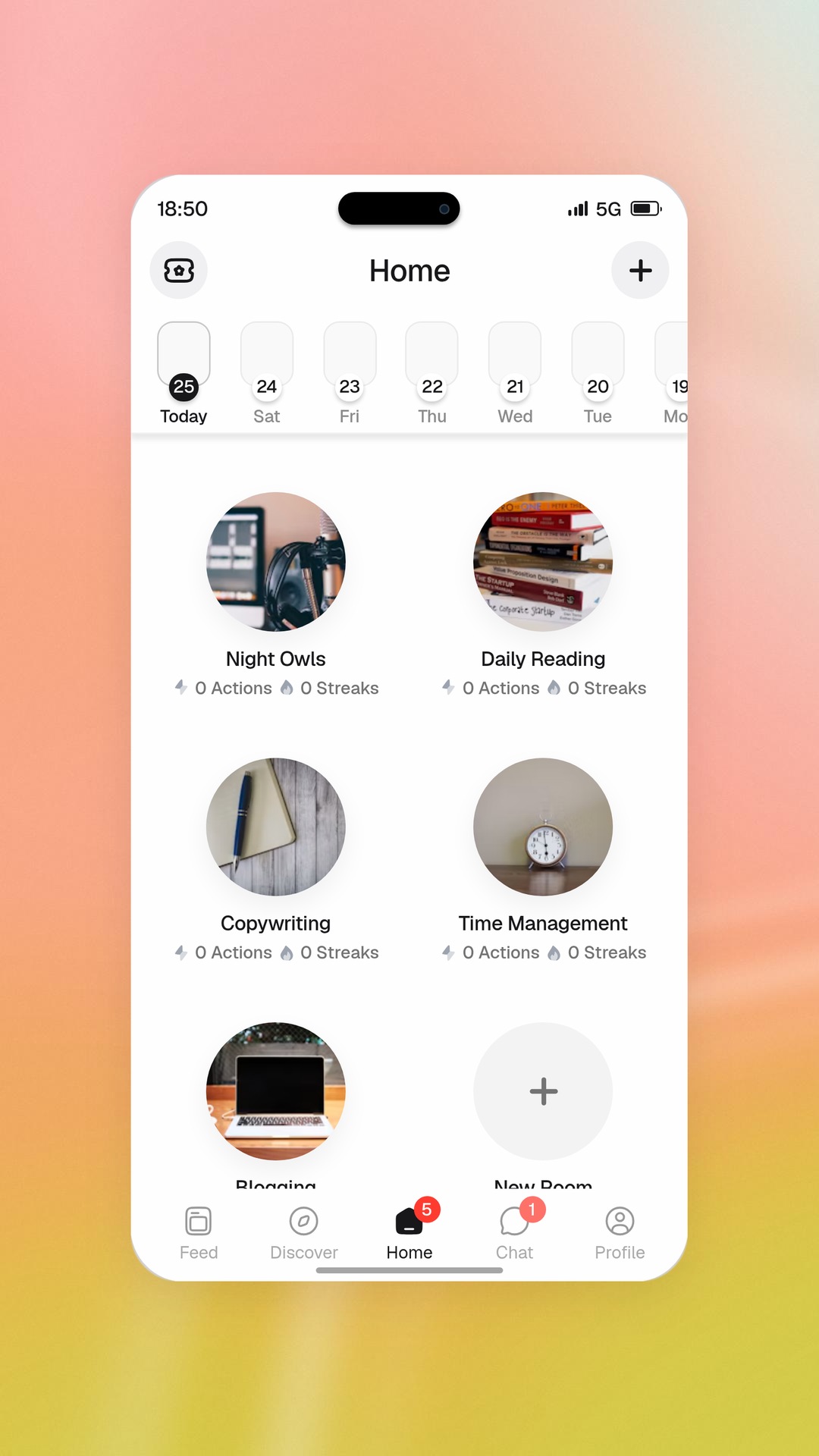
An Action Room turns the routine social: shared task list from the host, everyone's daily proofs in a feed, a member heatmap showing who started on time, reactions built in. The host curates; members submit and react.
The best morning rooms share a timezone band - the witness effect is strongest when your 6:30 confirmation lands while their 6:30 is also happening. Five to ten people in the same rough morning window is the sweet spot.
In in a company database pull from late September 2026, 36% of proofs received a social response: post your sunrise photo or your confirmation and someone reacts. At 6:35 AM, that small notification is oddly powerful - proof that the room is awake and watching.
Part 4: Use the streak and the reset
The wake-up streak is the morning routine's backbone: Aksa streaks move only on proof-backed days, so the count always means real mornings, not tapped boxes. Protect it with the floor - the ten-minute version keeps the chain alive on the worst days.
The Weekly Arena resets leaderboards every Monday at 00:00 UTC: the week you had the flu ends, and Monday starts the room at zero. Morning routines die from guilt spirals after bad weeks; the reset is the structural cure.
Watch the pattern, not the day: the heatmap shows whether the 6:30 confirmation is drifting to 7:15 over weeks - the slow slide that precedes collapse. Catch the drift at the Sunday review, not the month after.
The night before: where mornings are actually decided
The accountability loop starts the evening prior: the confirmed wake time is a promise made by evening-you to morning-you, and evening-you is the sober negotiator. Set the confirmation time before bed, not in bed.
Practical pairing: the last daily action of the night is a confirm - 'in bed by 11' - because the wake-up is downstream of the bedtime. Morning people are built at night; the app just makes both ends of the deal visible.
Prepare the proof path too: the running shoes by the door, the journal on the desk. The floor routine should require zero decisions at 6:30 - decisions are what the half-asleep attorney uses against you.
A worked example: thirty days of 6:30
Day one: room of six - three time zones, same morning window - standard posted: 'confirm by 6:45, two anchors, photo or timer by 8.' First confirmation: 6:33. The room reacts. It feels silly and works anyway.
Day twelve: the first miss - 7:50 confirmation after a 2 AM work call. Recorded honestly, no commentary from the room, restart next morning at the floor. The streak broke; the routine did not - because the system treats the miss as data, not doom.
Day thirty: 27 confirmed mornings, average wake time 6:34, and the anchors have grown on their own. The room's heatmap is a wall of green with honest holes. The snooze button still exists; it just has an audience now.
Common morning-routine mistakes
Designing for the ideal morning. The 90-minute routine works on days with no meetings, no kids and no rain - so about eight days a year. Design for the worst morning; the good ones take care of themselves.
Tracking without witnesses. A private log of wake times is a confession to no one. The room is not optional - it is the mechanism that prices the snooze.
Confusing the routine with the goal. The morning routine is infrastructure for the day's real work, not an end in itself. Keep it short enough that it funds the day rather than consuming it.
Setup checklist
- Wake-up confirmation time chosen - decided the night before, daily.
- Floor routine: two anchors, fifteen minutes, survives bad days.
- One proof per anchor: timer, photo or two-sentence answer - three minutes total.
- A room of five to ten in your morning window, first proofs tomorrow.
- Sunday review: read the heatmap for drift, adjust at the floor.
- Bedtime confirm paired: the wake-up is decided the night before.
FAQ
How do I hold myself accountable for waking up early?
Make the wake-up a timestamped, witnessed event: a daily confirmation by a set time, visible to a room of people in your morning window. The snooze button wins in private; when five people see 6:33 vs 8:15, the negotiation changes. Aksa's confirm primitive plus an Action Room runs exactly this.
What is the best morning routine accountability app?
Look for: a timestamped wake-up check-in, proof for each routine part (timer, photo, confirm), a room with a shared heatmap, streaks that count only real days, and a weekly reset for bad weeks. Aksa combines all five with an AI agent that nudges when you stall - free on iOS and Android.
How long should a morning routine be?
The floor version: fifteen minutes - wake confirmation plus two anchors like ten minutes of movement and five of planning. Heroic 90-minute routines die by day nine. Grow at weekly reviews only after the chain holds; the impressive routine is assembled from an unimpressive one that never broke.
What proof works for a morning routine?
Confirm for the wake-up (the timestamp is the point), a timer session or photo for movement, a two-sentence written answer for planning. Budget under three minutes of total proof - the logging must survive the same time pressure the routine does.
What if I have a bad sleep and miss the wake time?
Confirm honestly whenever you wake - 7:50 is data, not doom - and restart at the floor the next morning. The streak breaks by the rules; the routine does not. The weekly leaderboard reset (Mondays 00:00 UTC) gives a structural fresh start for genuinely bad weeks.
Does a morning routine actually matter?
As infrastructure, yes: the first hour sets the day's trajectory, and a witnessed, consistent start compounds into everything downstream. But the routine serves the day's real work - keep it short enough to fund the day, not consume it.
How do I stop snoozing?
Structure beats willpower at 6 AM: decide the wake time the night before (evening-you is the sober negotiator), make the confirmation witnessed, and put the first proof's props (shoes, journal) where no decision is needed. The half-asleep attorney loses when there is nothing to negotiate.
Can I do a morning challenge with friends?
Yes - that is the ideal morning room: shared standard ('confirm by 6:45, two anchors by 8'), five to ten people in the same morning window, heatmap visible, weekly podium for bragging rights. Timezone band matters: the witness effect peaks when everyone's 6:30 happens together.
Is Aksa's morning tracking free?
Yes - Aksa is free to download on iOS and Android with an optional Premium tier. Each friend who joins through your invite and finishes onboarding earns one month of Premium for both of you, up to five friends - a morning room that joins together effectively covers itself.